

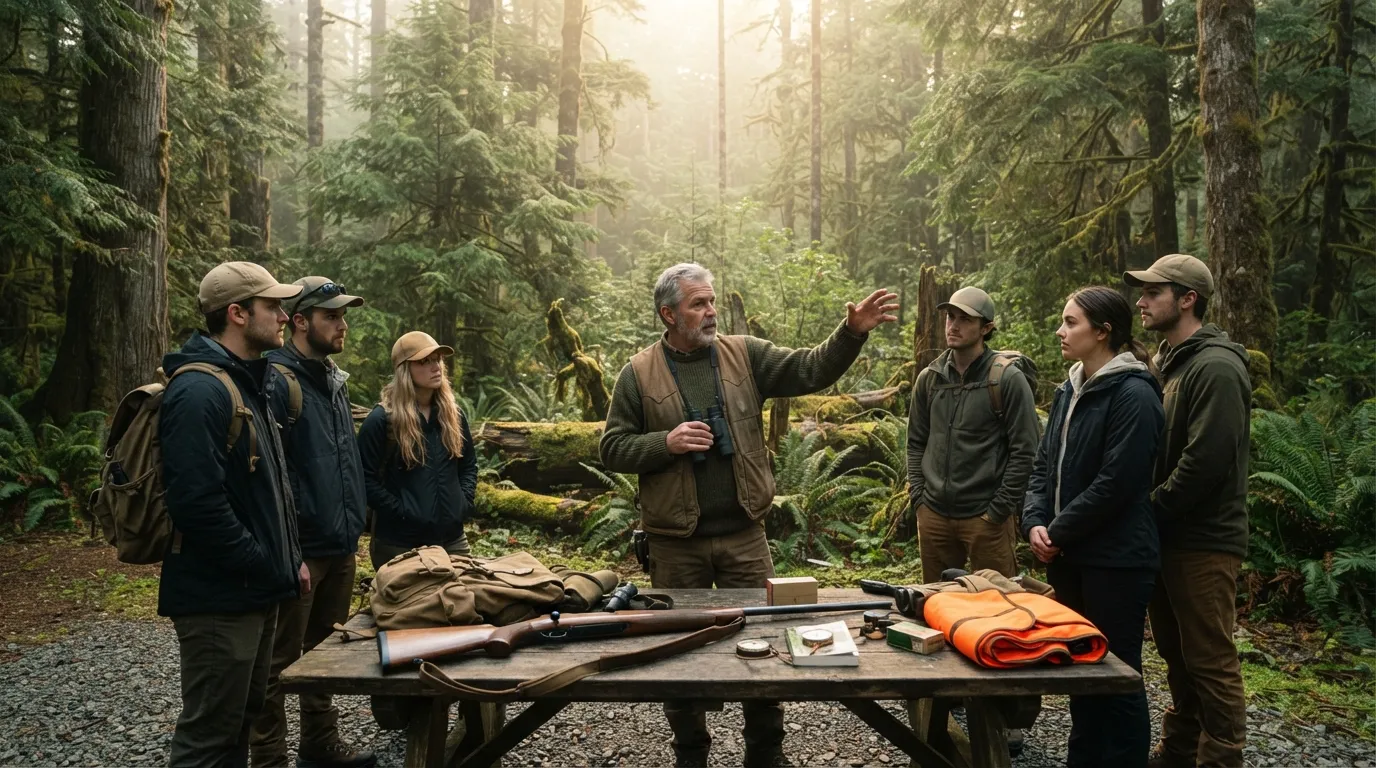
Hunting requires responsibility, preparation, respect for wildlife, and a strong understanding of safety and regulations. Vanisle Hunters helps connect new and developing hunters with hunter education, training opportunities, and experienced instructors on Vancouver Island and across B.C.
Hunter education can help participants build knowledge in areas such as firearm safety, hunting regulations, wildlife identification, outdoor survival, first aid, conservation, and ethical hunting practices.
Whether your goal is to pursue big game or small game, proper education is an important step toward becoming a knowledgeable and responsible hunter.
Through Vanisle Hunters, you can explore CORE preparation, firearms safety training, and additional practical hunting workshops designed to help you prepare for the field.

Connect with certified instructors, explore course dates, and prepare for your hunting licence in British Columbia. Get hands-on guidance for CORE hunter education, firearms safety (CFSC), and Vancouver Island regulations.
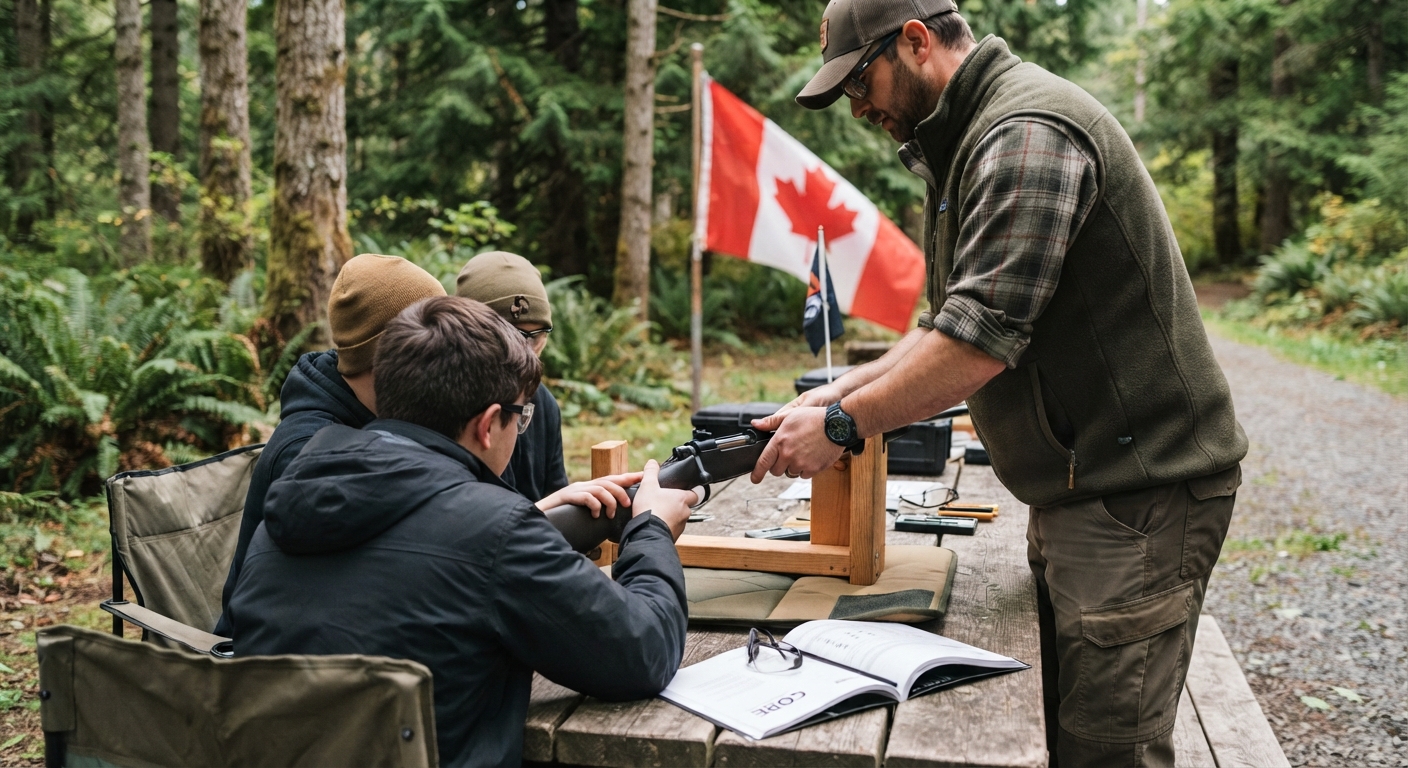
Safety is one of the most important foundations of responsible hunting. Hunters may use firearms, archery equipment, and other legal hunting tools depending on the species and season.
Hunter education teaches essential safety practices, including:
Ethical hunting requires more than knowing how to harvest an animal. Responsible hunters understand their role in wildlife conservation and follow established laws and ethical practices.
Hunter education helps participants learn about:
Regulated hunting plays an important role in wildlife management and conservation in British Columbia.
Hunter education introduces participants to:
Correct species identification is essential before taking any shot.
Hunter education helps hunters understand:
Hunter education builds the foundation for safe and responsible hunting.
Depending on the course or workshop, hunters may develop skills in:
✓ Firearm safety and handling
✓ Hunting regulations
✓ Wildlife identification
✓ Navigation and outdoor preparation
✓ Tracking and scouting
✓ Field dressing and meat care
✓ Archery techniques
✓ Hunting ethics and conservation
The Conservation and Outdoor Recreation Education (CORE) Program is British Columbia's hunter education program, operated by the B.C. Wildlife Federation (BCWF) on behalf of the provincial government.
CORE provides foundational education in outdoor ethics, firearm handling, hunting regulations, animal and bird identification, outdoor survival, first aid and safety, hunter heritage, conservation, and wildlife management.
Successful completion of recognized hunter safety training is required to obtain a hunting credential used to purchase most B.C. hunting licences. Youth and Initiation Hunting Licences have specific hunter-safety exemptions and supervision requirements.
Classroom instruction is recommended but not mandatory. Students may prepare through an in-person CORE course or self-study using the CORE manual or BCWF online course, with required examinations completed through a certified CORE Examiner.
The Canadian Firearms Safety Course (CFSC) is a federal firearms safety program focused on responsible firearm ownership and use.
Successful completion of the CFSC allows eligible applicants to apply for a Possession and Acquisition Licence (PAL) through the Canadian Firearms Program, issued separately upon eligibility verification.
A successful hunt continues after harvest. Butchering and meat-care workshops help hunters develop practical skills for field preparation, safe meat handling, basic processing techniques, and proper care of harvested animals.
These workshops are designed to help hunters make responsible and sustainable use of their harvest.
The Conservation and Outdoor Recreation Education (CORE) Program is the recognized hunter education program in British Columbia. Completing CORE helps hunters develop essential knowledge of hunting regulations, ethics, conservation, wildlife identification, and firearm safety.
The CORE certification process generally includes:
Hunters can prepare through an approved CORE course, self-study materials, or online learning resources.
The written exam evaluates knowledge of hunting laws, ethics, conservation, wildlife identification, and safe hunting practices.
Students demonstrate safe firearm handling skills through a practical assessment conducted by a certified CORE Examiner.
After successfully completing the required examinations, the hunter receives recognized proof of hunter safety training.
The completed hunter safety credential is recorded with the hunter’s B.C. Fish and Wildlife ID (FWID) and can be used when meeting hunting licence requirements.
Hunters who successfully complete the Canadian Firearms Safety Course (CFSC) may be exempt from the CORE practical firearms-handling examination if they provide the required CFSC documentation to a certified CORE Examiner.
Selection of Hunting Gear and Equipment
Wilderness Navigation and Survival Situations
Wilderness First Aid for Hunters
Tracking and Trailing Techniques
Laws and Regulations for Hunting in BC
Archery Shooting Techniques
Workshop for Butchering and Meat Care
Hunting Ethics and Conservation Practices
Wildlife Identification and Species Recognition
Outdoor Wild Game Cooking
Camouflage and Concealment Techniques
Wildlife Behavior and Strategies for Scouting
Introduction to Waterfowl Hunting
Small Game Calling Techniques
Shooting Techniques for Precision Hunting

Proper education is the foundation of safe, ethical, and responsible hunting.
Whether you are preparing for your first licence, improving your knowledge, or expanding your hunting skills, Vanisle Hunters can help you find the right education and training opportunities for your goals.